
How to Build a Balanced Meal
Nutrition doesn’t need to be complicated - but it does need to be intentional.
Rather than focusing on restriction, calorie counting, or cutting out entire food groups, building a balanced plate is about giving your body the nutrients it needs to function at its best. When meals contain the right balance of protein, fibre, fats and carbohydrates, blood sugar is more stable, energy is more consistent, cravings are reduced, and hormones are better supported.
The balanced plate provides a simple framework you can use at any meal, at home or on the go. It removes the guesswork and helps you build meals that support metabolic health, hormone balance, gut function, and long-term wellbeing.
Let’s break it down.
Protein
Protein plays a vital role in preserving muscle mass, supporting hormone balance, and keeping you feeling full for longer. After 30, we naturally begin to lose muscle unless we take action. Combining adequate protein intake with resistance training is your best defence against metabolic slowdown.
Target: 1.2g-1.5g of protein per kg of body weight
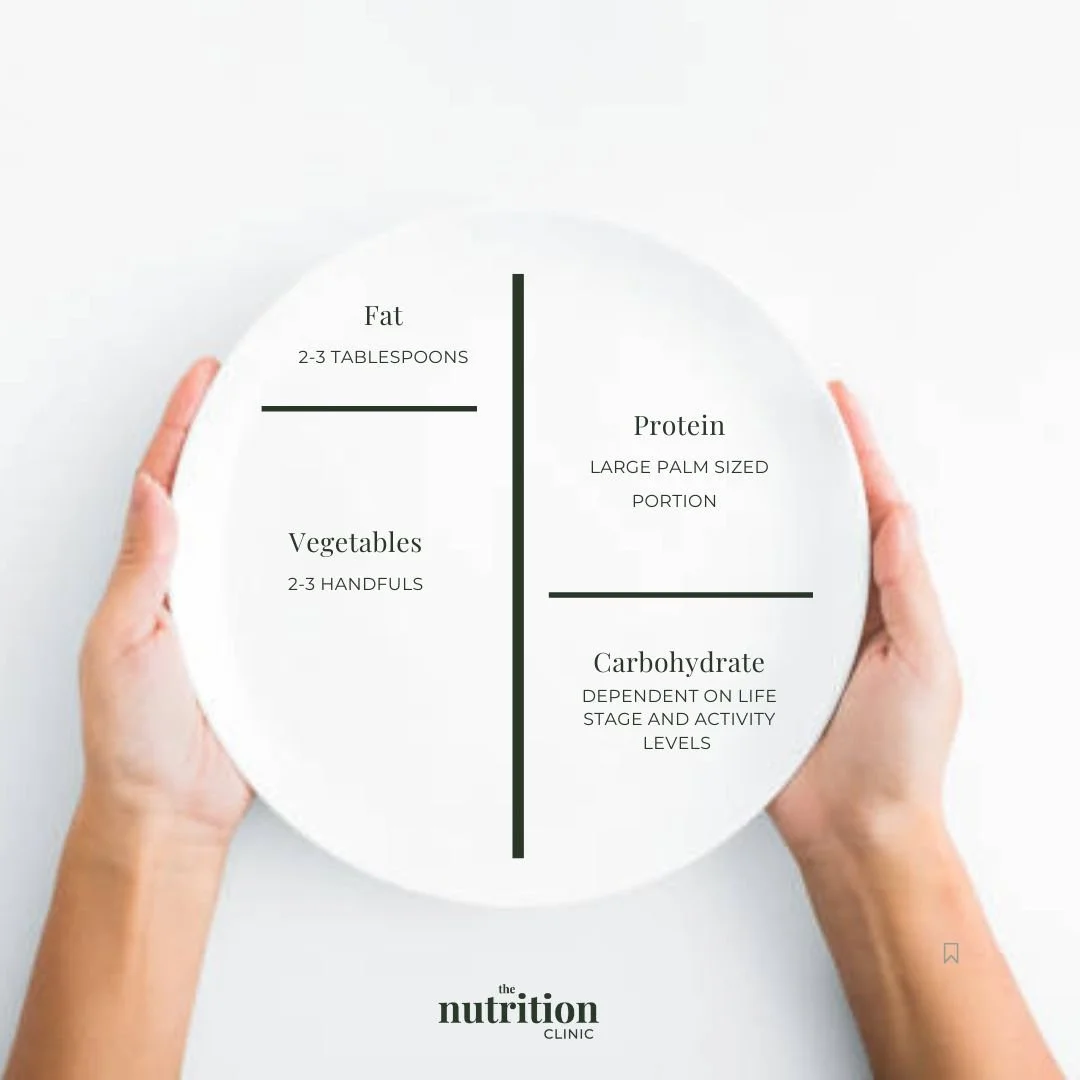
A good way to eyeball this can also be a large palm sized portion at each meal
Include the following protein sources:
Red meat
Chicken
Fish
Eggs
Dairy - Unsweetened Greek Yogurt, Cottage Cheese/Quark
Tofu, Tempeh
Protein Powder
Other ways to boost protein in your meals, but are not a complete source of protein is through nuts, seeds, lentils, legumes, chickpeas, beans.
Fibre
Fibre supports regular bowel movements, feeds beneficial gut bacteria, assists with oestrogen clearance through the digestive tract, improves cholesterol markers, and slows the absorption of glucose into the bloodstream. This slowing effect helps prevent blood sugar spikes and crashes, which directly influences energy, mood and cravings. Most people fall well short with their fibre intake. Fibre is found in plant-based, wholefoods, especially when eaten in their least processed form.
Target: 25-30g of fibre per day
A good way to eyeball this is 4-6 handfuls of fibre rich food daily
Include a mix of:
Vegetables: especially leafy greens, brassicas, carrots, zucchini, pumpkin
Legumes: lentils, chickpeas, black beans, kidney beans
Wholegrains: oats, brown rice, buckwheat, quinoa
Nuts and seeds: chia, flaxseeds, almonds, walnuts, cashews, pumpkin seeds
Fruit: berries, kiwifruit, pears, apples (preferably with skin), pineapple, stone fruit
Fat
Dietary fat is essential! Fats are required for the production of steroid hormones (including oestrogen and progesterone), support cell membrane integrity, aid in the absorption of fat-soluble vitamins (A, D, E, K), regulate inflammation, and contribute to satiety and blood sugar control.
When fat is included in a meal, digestion slows down. This leads to steadier glucose release, improved fullness signals, and fewer post-meal energy crashes. The focus should be on the quality of fats consumed.
Target: Include 2-3 finger sized portions of healthy fat per meal
Focus on anti-inflammatory fats like:
Extra virgin olive oil
Avocado
Nuts and seeds
Oily fish (salmon, sardines, mackerel)
Avoid or limit inflammatory fats from:
Processed seed oils (soybean, canola, sunflower oil in processed foods)
Deep-fried and ultra-processed snack foods
Packaged baked goods with trans fats
Carbohydrates
Energy, nervous system support, and craving reduction
Carbohydrates are not something to fear. They are a primary source of energy for the body and brain and provide important micronutrients, fibre, and compounds that support gut health, thyroid function, and hormone balance. The key with carbohydrates isn’t elimination, it’s type, timing, and amount, which can shift depending on life stage, activity level, stress, and recovery.
During perimenopause and beyond, hormonal changes often brings a decline in insulin sensitivity, meaning your body doesn’t process carbs as efficiently. Large amounts of refined or rapidly absorbed carbohydrates are more likely to contribute to blood sugar spikes, energy crashes, increased fat storage (particularly around the abdomen). This doesn’t mean carbohydrates should be removed, but it does mean that higher-fibre, whole-food sources and more mindful portioning tend to work better in this phase of life.
Activity level plays a major role in how carbohydrates are handled. In more sedentary states, the body’s demand for quick energy is lower, so carbohydrates are less likely to be used immediately and more likely to be stored. When exercise demand is high, carbohydrates become an important tool for performance, recovery, muscle repair, and nervous system support, and tolerance is generally much better.
Target: Start with 1/2 cup of carbohydrate per meal, adjusted based on your activity level and response.
Focus on single-ingredient, wholefood carbs, such as:
Vegetables: kūmara, pumpkin, parsnip, beetroot, carrots
Legumes: chickpeas, lentils, beans
Wholegrains: brown rice, oats, quinoa, buckwheat
Fruit: berries, bananas, apples, stone fruit
Limit refined and ultra-processed carbs (white bread, biscuits, pasta, sugary cereals), which are more likely to cause energy dips and cravings.
Tip: Always pair carbohydrates with protein and fat to reduce blood sugar spikes.
Your Ideal Plate Model
The ideal plate model is built around the idea that the body functions best when protein, fats, fibre and carbohydrates are eaten together, rather than in isolation. Each macronutrient plays a different role in digestion, blood sugar regulation, hormone signalling and satiety, and it’s the combination that creates stability.
Protein helps anchor the meal, supporting muscle repair, metabolic health and appetite control. Fibre and fats slow digestion, preventing rapid blood sugar spikes and crashes, while also supporting gut health and hormone balance. Carbohydrates provide readily available energy for the brain, muscles and nervous system, but when paired with protein, fat and fibre, they are absorbed more steadily and used more efficiently.
Including all components at each meal helps keep energy levels consistent, reduces cravings, supports mood and focus, and places less stress on blood sugar and cortisol regulation. Rather than chasing “perfect” meals or eliminating food groups, the ideal plate offers a practical framework for creating meals that are nourishing, satisfying and supportive of long-term health.
Wholefood Eating, For Life.
Diets often rely on restriction, willpower, and unrealistic rules. They disconnect you from your body’s natural hunger cues, demonise certain foods, and create a cycle of guilt, deprivation, and eventual rebound. You might lose weight, but it’s usually short-term, and it often comes at the expense of your energy, mood, and metabolism.
Our approach is different.
It nourishes rather than deprives
It focuses on protein, fibre, wholefood carbs, and healthy fats to support stable energy and hormones
It prioritises muscle maintenance and prevents muscle loss
It builds habits that are doable in real life, not just for a week
It trains you to trust your hunger and fullness signals, instead of fearing them
When you give your body the nutrients it needs and stop swinging between extremes, your metabolism can thrive. Your cravings calm down. You feel more in control.
And most importantly, this way of eating supports your health, strength, and wellbeing for the long haul.